
Organised by Human Rights Defence International & The Office of Public Affairs of the Bahá’ís of India
Date: 4th July 2025 (Friday)
Time: 4:00 PM – 7:00 PM
Venue: Constitution Club of India, New Delhi
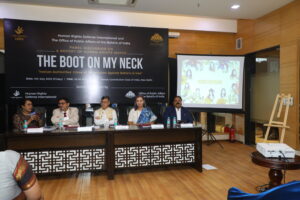
The Human Rights Defence International (HRDI), in collaboration with the Office of Public Affairs of the Bahá’ís of India, organised an impactful panel discussion on 4th July 2025 at the Constitution Club of India. The focus of the event was the Human Rights Watch report titled “The Boot On My Neck”, which chronicles the sustained and systematic persecution of the Bahá’í community in Iran. The discussion was graced by distinguished legal minds, human rights advocates, academics, authors, media professionals, school principals, and members of the Bahá’í community.
Inaugural Session
The event formally commenced at 4:30 PM with Ms. Carmel Tripathi (Office of Public Affairs of the Bahá’ís of India) anchoring the session. A warm welcome address was delivered by Mr. Rajesh Gogna, Human Rights Advocate and Secretary General, HRDI. This was followed by opening remarks by Ms. Nilakshi Rajkhowa, Director – Office of Public Affairs of the Bahá’ís of India, who outlined the objectives of the gathering and the importance of international solidarity in the face of state-sponsored persecution.
Panel Discussions
Dr. Sidharth Luthra, Senior Advocate, Supreme Court of India and former Additional Solicitor General, highlighted the systemic oppression faced by religious minorities and refugees. He spoke about how Bahá’ís are deprived of educational access and basic civil liberties in Iran, and urged attendees—especially youth—to channel their privileges toward supporting vulnerable communities. He also drew attention to widespread ignorance about the Bahá’í faith in India, using the example of the Lotus Temple.
Dr. Charu WaliKhanna, author and former member of the National Commission for Women, spoke passionately about the intersectional challenges faced by Bahá’í women, including arbitrary detention, physical and mental assault, and state-backed coercion to renounce their faith. She gave examples of women who faced disproportionate punishment and even chose martyrdom over forced conversion, underscoring the deep gendered and religious oppression they endured. Her speech highlighted the deep-rooted gendered violence faced by elderly Bahá’í women.
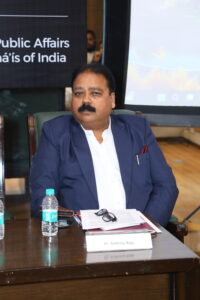
Dr. Anthony Raju, Advocate, Supreme Court of India and Chairman of the All India Council of Human Rights, emphasized the universality of human rights. He drew attention to Iran’s violation of rights enshrined in international covenants and Indian constitutional values, calling on civil society and youth to become vocal allies for the persecuted.
Presentation by Intern
Ms. Khushi Taneja, an intern at the Office of Public Affairs of the Bahá’ís of India, delivered an informative presentation titled “Understanding the Persecution of Bahá’ís in Iran.” Her presentation highlighted:
Iran’s 1991 memorandum institutionalizing the marginalization of Bahá’ís, denying them education, employment, and legal recognition; State-sponsored hate campaigns and the denial of burial rights; Cultural and economic exclusion, including surveillance, confiscation of property, and harassment of Bahá’í artists and students; The targeting of Bahá’í women and violation of treaties Iran is a signatory to, including the ICCPR and ICESCR.
Open Forum and Audience Interaction
The open forum was dynamic and interactive. It began with a sharp and poignant query by Ms. Jyotika Kalra, Managing Partner at Resolve Legal and former NHRC member. She questioned the rationale behind the extreme persecution of Bahá’ís in Iran and probed into the socio-psychological justifications behind such state policies. The query was addressed by Dr. WaliKhanna and Dr. Luthra, who explained how religious intolerance is often used as a political tool to divert public unrest.
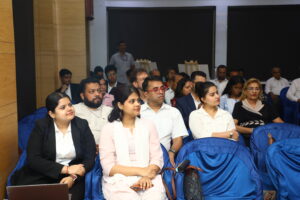
Several other questions were raised by law interns, press professionals, school principals, authors, and members of the Bahá’í community. Notably, one recurring question was, “How can young legal professionals contribute to this cause?” The panelists responded by encouraging interns and early-career advocates to use litigation, academic research, and policy engagement as means to amplify marginalized voices. The discussion reflected a strong sense of intergenerational engagement and legal responsibility.
Declaration and Closing
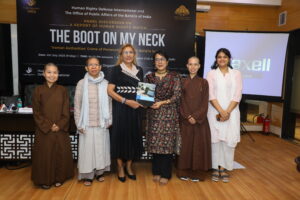
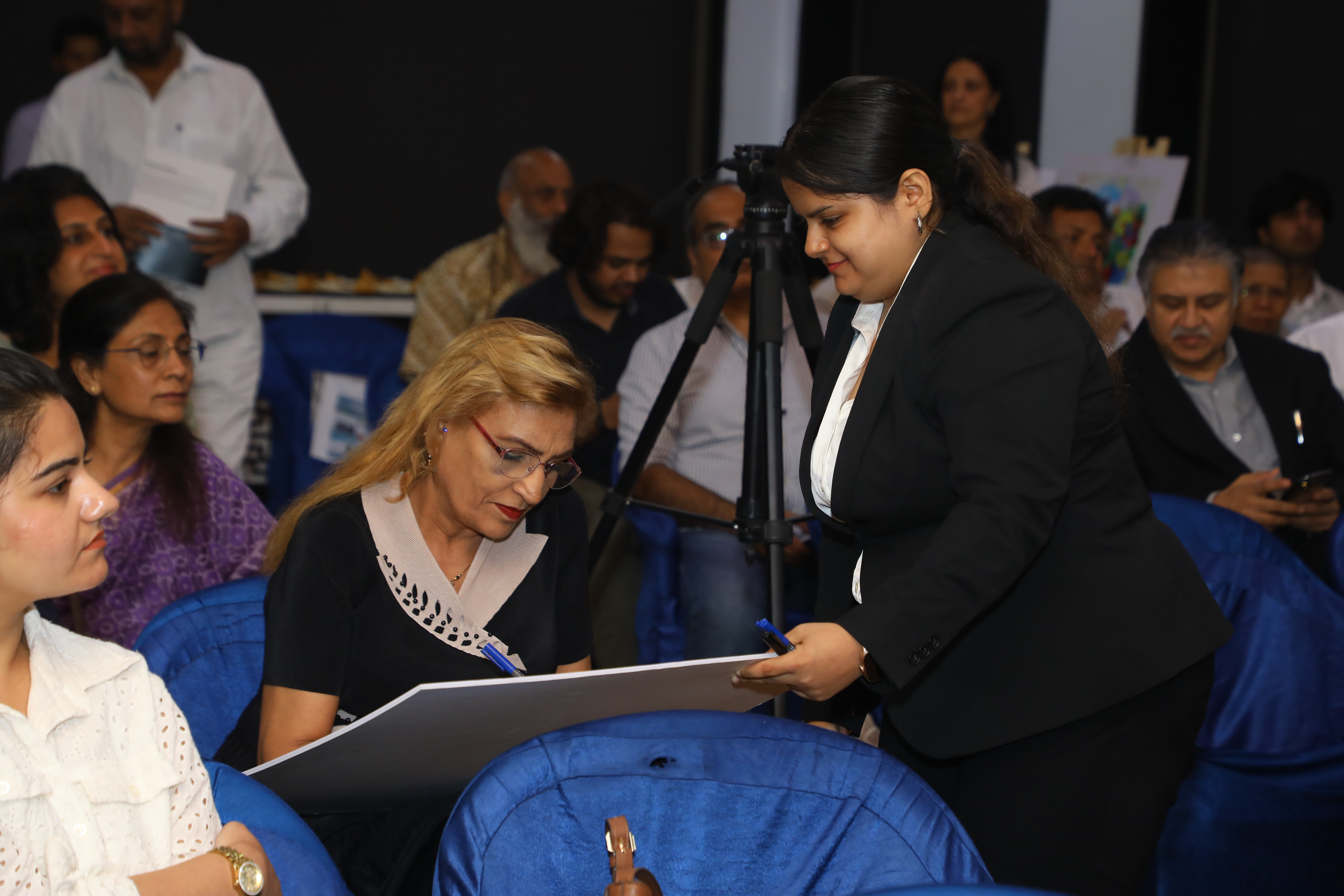
At 6:15 PM, Dr. Sidharth Luthra formally read out the Delhi Declaration, a collective statement condemning the persecution of Bahá’ís in Iran. It was signed by panelists, special guests, and attendees, symbolizing a united stand against religious intolerance.
The evening concluded with a vote of thanks by Ms. Nilakshi Rajkhowa, acknowledging the panellists, participants, and audience for their meaningful presence and contributions. The event concluded by 7:00 PM.
During the course of the event, Ms. Shreya Rajkamal, intern at Human Rights Defence International (HRDI), played a pivotal role in coordinating the panel discussion to ensure it progressed smoothly. She meticulously managed the flow of the programme and took the initiative to personally ensure that all distinguished guests, attendees, and participants signed the Delhi Declaration. Her commitment to the cause, attention to detail, and professional conduct added great value to the event. Shreya’s engagement exemplified how dedicated young professionals can contribute meaningfully to human rights advocacy through both coordination and active participation.
Summary
The panel discussion succeeded in raising crucial awareness about the plight of the Bahá’í community in Iran. It served not only as a legal and humanitarian forum but also as a platform for youth and professionals to channel their efforts towards global justice. The event exemplified how informed dialogue, collective condemnation, and inter-community support can pave the way for a more just and inclusive world.
Report Prepared by : Shreya Rajkamal, Anushka Acharya
HRDI Intern
